Japan Highlights: Tokyo to Kyoto
Neon cities, sacred temples, and the art of the counter seat — a privately guided journey through Japan's contrasts
- Duration
- 10 Days / 9 Nights
- Destinations
- Tokyo · Hakone · Kyoto · Osaka
- Best season
- March – May / Oct – Nov
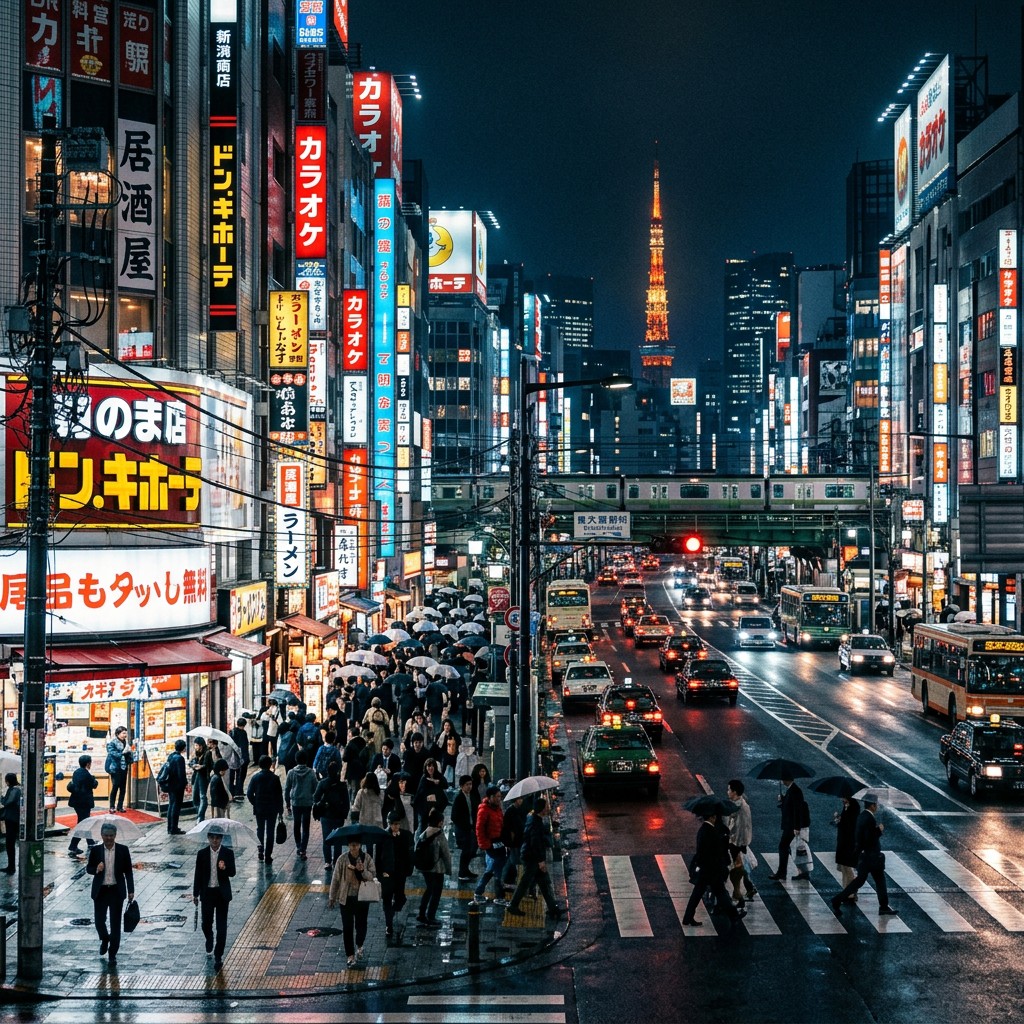
From the cinematic skyline views of Shinjuku to the bamboo silence of Arashiyama, this journey reveals Japan's extraordinary range — world-class food, living craft traditions, and landscapes that shift from volcanic peaks to ancient cedar forests in a single bullet-train hour. Every experience is privately guided, every transfer seamless, and every evening yours to explore at your own rhythm.
Day 1
Arrival in Tokyo
Your private driver meets you at Haneda or Narita arrivals and transfers you to Aman Tokyo, where washi-paper screens and camphor-wood interiors create an immediate sense of calm above the Otemachi skyline. Settle in with a seasonal welcome tea on the 33rd floor, then let the evening unfold at your pace — your Byline concierge has a curated list of nearby izakayas if jet lag allows.
- Stay: Aman Tokyo — Corner Suite with Imperial Palace Garden views
Day 2
Tokyo: Temples, Markets & Omakase
Begin with a privately guided morning at Senso-ji in Asakusa, arriving before the crowds to walk Nakamise-dori with context only a local historian can provide. Cross to the Ueno district for the Tokyo National Museum's Japanese Gallery — your guide secures timed entry and narrates the Edo-period screen paintings. After lunch at a tucked-away tempura counter in Nihonbashi (eight seats, seasonal vegetables fried to order), spend the afternoon exploring Yanaka's quiet temple lanes. Evening: an omakase dinner at a seven-seat sushi counter in Ginza, where the itamae selects the night's catch from Toyosu Market that morning.
- Culinary: Private omakase dinner, Ginza (12-course seasonal tasting)
- Cultural: Tokyo National Museum priority entry with art historian guide
Day 3
Tokyo: Shibuya, Harajuku & the New York Bar
A self-guided morning through Meiji Shrine's forested approach, then your guide leads you through Harajuku's Takeshita-dori and the contrast of Omotesando's architectural flagships. Lunch at the basement food halls of a Shibuya department store — an education in Japanese convenience and craft. Afternoon at leisure: your Byline companion can arrange teamLab Borderless tickets, a matcha workshop in Omotesando, or quiet time at Shinjuku Gyoen. The evening belongs to the Park Hyatt's New York Bar, 52 floors above the city — live jazz, a Suntory Yamazaki whisky flight, and the skyline Bill Murray made famous.
- Scenic: New York Bar at Park Hyatt Tokyo — cocktails with panoramic Shinjuku views
Day 4
Tokyo to Hakone: Hot Springs & Mount Fuji
Private car south to Hakone, tracing the volcanic valley where sulfur vents steam against cedar forests. Check into Gora Kadan, a ryokan converted from a former imperial summer retreat, where tatami suites open onto private open-air onsen baths. Afternoon: a Lake Ashi cruise with Fuji views (weather permitting), followed by the Hakone Open-Air Museum's Henry Moore collection set against mountain ridgelines. Evening kaiseki dinner at the ryokan — a multi-course procession of seasonal Sagami Bay fish, mountain vegetables, and Hakone spring water tofu.
- Stay: Gora Kadan — Private onsen suite
- Culinary: Multi-course kaiseki dinner with sake pairing
Day 5
Hakone to Kyoto via Shinkansen
Morning at leisure in the ryokan's hot spring baths, then private transfer to Odawara Station for the bullet train to Kyoto — watch the landscape flatten from volcanic hills to rice paddies in under two hours. Arrive at The Shinmonzen, a boutique hotel by Tadao Ando on the banks of the Shirakawa canal in Gion. Afternoon walking tour of Gion's hanamachi (geisha district) with a cultural historian who explains the ochaya (teahouse) system still operating behind closed doors. Evening: a private dinner at a machiya townhouse restaurant serving Kyoto-style obanzai (home-cooked seasonal dishes).
- Stay: The Shinmonzen by Tadao Ando — Canal-view suite in Gion
- Scenic: Shinkansen reserved Green Car seats, Odawara to Kyoto
Day 6
Kyoto: Golden Pavilion, Zen Gardens & Tea Ceremony
Your guide collects you for an early visit to Kinkaku-ji (Golden Pavilion) before tour buses arrive, then onward to Ryoan-ji's enigmatic rock garden for quiet contemplation. Mid-morning, participate in a private tea ceremony at Urasenke, one of Kyoto's three grand tea schools — a 45-minute ritual of whisked matcha, seasonal wagashi sweets, and precise, meditative movements. Lunch at Kikunoi Honten, a Michelin three-star kaiseki restaurant where Chef Murata's philosophy of "Japanese cuisine as culture" unfolds over eight courses. Afternoon: the bamboo groves of Arashiyama and the lesser-visited Gio-ji moss temple nearby.
- Cultural: Private tea ceremony at Urasenke tradition
- Culinary: Lunch at Kikunoi Honten (reserve well in advance)
Day 7
Kyoto: Fushimi Inari & Nara Day Trip
Dawn ascent of Fushimi Inari's ten thousand vermillion torii gates — your guide takes the forest trail beyond where most visitors turn back, revealing sub-shrines and mountain views in near-solitude. Then a 45-minute train to Nara: walk among the sacred deer of Nara Park, enter Todai-ji's Great Buddha Hall (the world's largest wooden building), and explore Naramachi's Edo-period merchant houses. Return to Kyoto for an evening at leisure — your Byline concierge can arrange a sake-tasting walk through Fushimi's brewery district or a quiet dinner in Pontocho alley.
- Cultural: Fushimi Inari private dawn ascent (mountain trail extension)
- Scenic: JR Nara Line regional train through southern Kyoto countryside
Day 8
Kyoto to Osaka: Street Food & City Energy
Morning at leisure in Kyoto — revisit a favorite temple or browse Nishiki Market's 400-year-old stalls for pickled vegetables, fresh yuba, and roasted hojicha. Afternoon transfer to Osaka, Japan's kitchen capital. Check into the Conrad Osaka, where floor-to-ceiling windows frame the Nakanoshima waterfront. Your guide leads a walking food tour through Dotonbori and Shinsekai — takoyaki (octopus balls) from a 60-year-old stall, kushikatsu (deep-fried skewers) at a standing counter, and seasonal street-side yakitori. End at a tiny standing bar in Ura-Namba for a final highball.
- Stay: Conrad Osaka — River-view suite, Nakanoshima
- Culinary: Guided Osaka street-food crawl (5+ stops, Dotonbori to Shinsekai)
Day 9
Osaka: At Leisure
A free day shaped by your interests. Your Byline companion can arrange: a morning cooking class learning to make dashi and okonomiyaki; a visit to Osaka Castle and its surrounding plum gardens; a half-day trip to the ceramics town of Sakai; or simply a slow exploration of the Nakazakicho vintage neighborhood. Final evening: a kappo-style dinner at a chef's counter — intimate, seasonal, and improvisational, the quintessential Osaka dining experience.
- Culinary: Farewell kappo dinner, chef's counter (6–8 courses, seasonal Osaka style)
Day 10
Departure
Private transfer to Kansai International Airport. Your Byline concierge confirms flight details and handles any last-minute luggage shipping (takkyubin) if you've acquired ceramics, textiles, or tea along the way.
All accommodation at handpicked properties (Aman Tokyo, Gora Kadan, The Shinmonzen, Conrad Osaka). Private airport transfers and intercity transport including Shinkansen Green Car. Local private guides for all scheduled touring days. Daily breakfast at each hotel. Omakase dinner in Ginza, kaiseki dinner at Gora Kadan, lunch at Kikunoi, Osaka street-food tour, and farewell kappo dinner. Private tea ceremony, museum priority entries, and Fushimi Inari dawn walk. Byline trip companion and 24/7 remote support throughout. — speak with your Byline travel planner for flight options.
Every Byline journey is built to order — swap a hotel, add a day, tune the rhythm.
Customize This Journey