Namibia: Dunes, Desert & the Skeleton Coast
The world's tallest sand dunes, desert-adapted elephants, and a coastline where the Atlantic meets the Namib in a fog of salt and silence — Africa at its most elemental
- Duration
- 8 Days / 7 Nights
- Destinations
- Windhoek · Sossusvlei · Swakopmund · Damaraland · Etosha
- Best season
- May – October (dry season)
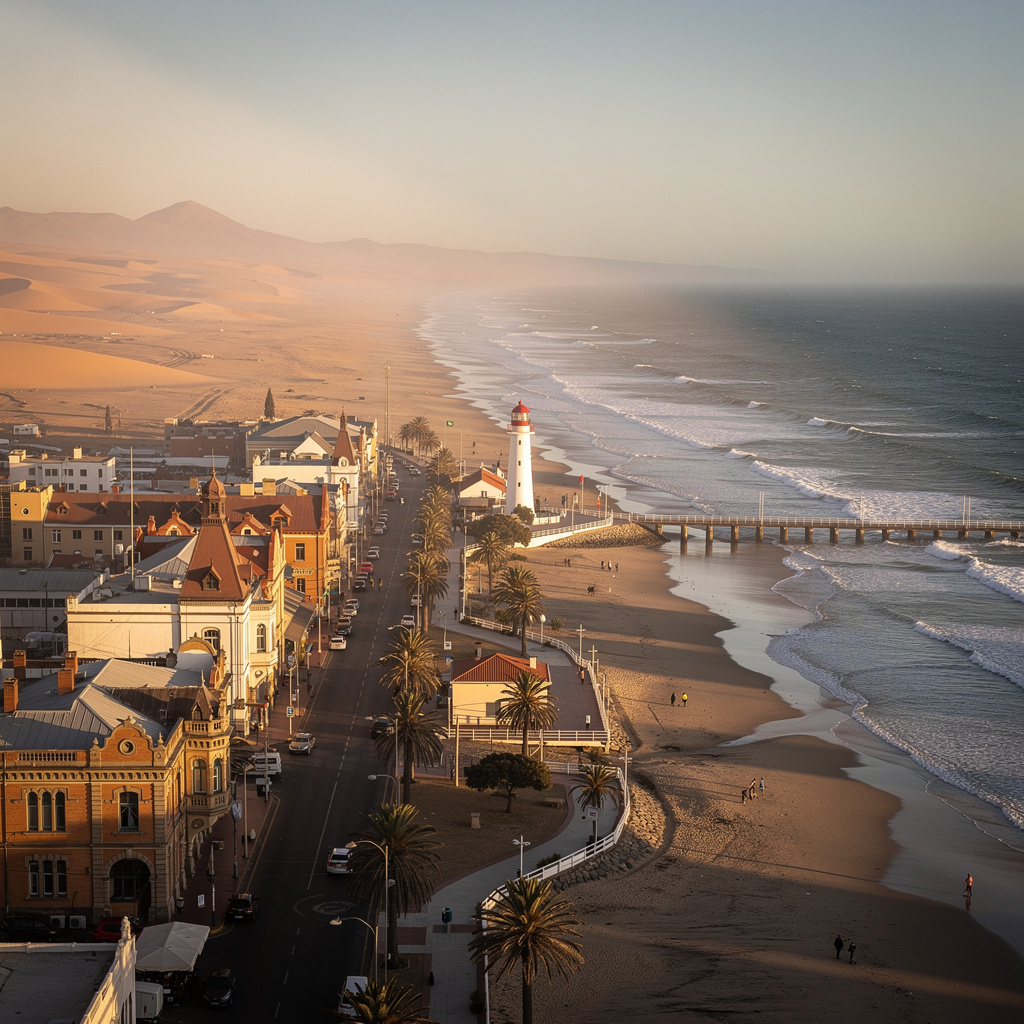
Namibia is the country that photography was invented for — Sossusvlei's red dunes against a blue sky, Deadvlei's 900-year-old skeleton trees in a white clay pan, and Etosha's waterhole dramas where elephants, lions, and springbok converge at sunset. This journey crosses the country from the capital through the desert to the coast and north to the game reserves, covering Namibia's extraordinary range in a single loop.
Day 1
Arrival in Windhoek
Fly into Hosea Kutako Airport. Private transfer to The Olive Exclusive, a boutique hotel on a hillside above Windhoek — seven suites, each designed around a different African theme, with a pool overlooking the capital. Evening: welcome dinner at The Stellenbosch, a Windhoek institution — game-meat platter (oryx, kudu, springbok), Namibian beef, and a South African Pinotage.
- Stay: The Olive Exclusive — Hillside suite
- Culinary: Game-meat platter dinner
Day 2
Windhoek to Sossusvlei: The Red Dunes
Private car or scenic flight south to Sossusvlei (5 hours driving, 1 hour flying). Check into &Beyond Sossusvlei Desert Lodge, built into a private reserve bordering the Namib-Naukluft National Park — suites with glass walls facing the desert, a star-observation deck with a telescope, and the silence of 65 million years of sand. Afternoon: sundowner drive into the desert — watch the dunes change from orange to crimson to violet as the sun drops. Dinner under the stars.
- Stay: &Beyond Sossusvlei Desert Lodge — Desert-view suite
- Scenic: Sundowner desert drive
Day 3
Sossusvlei & Deadvlei: Dawn in the Dunes
Pre-dawn departure to reach Sossusvlei at sunrise — enter the park gate at first light and drive to Dune 45 for the climb (325 meters, the sand is soft and the ridge is narrow, the sunrise shadows sculpt the dune fields). Continue to Deadvlei, the clay pan surrounded by the world's tallest dunes (Big Daddy, 325 meters) where 900-year-old camelthorn trees stand perfectly preserved, black against the white clay and the orange dunes — the most photographed landscape in Africa. Walk through Sesriem Canyon (a narrow gorge cut into the conglomerate rock). Afternoon at leisure at the lodge — guided nature walk, spa, or simply the vast desert view. Second night at Sossusvlei.
- Scenic: Sossusvlei sunrise, Dune 45 climb, Deadvlei, Sesriem Canyon
Day 4
Sossusvlei to Swakopmund: Atlantic Coast
Drive west to Swakopmund (4 hours, through the Kuiseb Pass and across the gravel plains to the Atlantic). Swakopmund is Namibia's quirky German-colonial beach town — Art Nouveau buildings, a brewery, and the cold Benguela Current creating fog that sustains the coastal desert ecology. Check into The Strand Hotel on the waterfront. Afternoon: explore the town, visit the Kristall Galerie (the world's largest quartz crystal), or walk the Jetty for ocean views. Dinner at The Tug, a restaurant built from a beached tugboat — fresh Namibian oysters (Walvis Bay produces some of the world's best), linefish, and a craft beer from the local Camelthorn Brewery.
- Stay: The Strand Hotel, Swakopmund — Ocean-view room
- Culinary: Namibian oysters and linefish at The Tug
Day 5
Swakopmund: Coast Adventures
Morning: Walvis Bay kayaking — paddle among Cape fur seals, pelicans, and flamingos in the lagoon. Continue to Sandwich Harbour (4x4 access only), where towering dunes meet the Atlantic in one of Africa's most dramatic landscapes — your guide navigates the sand road between the dunes and the water at low tide. Lunch: picnic at Sandwich Harbour. Afternoon: optional quad-biking on the dunes, skydiving over the desert-coast boundary, or a more contemplative visit to the Welwitschia Plains (ancient plants over 1,000 years old, growing in the desert). Evening at leisure.
- Scenic: Walvis Bay kayaking (seals, flamingos), Sandwich Harbour 4x4
- Optional: Quad-biking, skydiving, Welwitschia Plains
Day 6
Swakopmund to Damaraland: Desert Elephants
Drive north into Damaraland (4 hours), the rugged semi-desert where desert-adapted elephants, black rhino, and giraffe survive in one of the harshest environments any large mammal inhabits. Check into Damaraland Camp, a joint venture with the local Torra Conservancy — canvas-and-thatch chalets with rock-desert views and a community-owned conservation model. Afternoon: guided drive to track desert-adapted elephants — herds that have learned to walk 70+ km between water sources, dig wells in dry riverbeds, and survive on less water than any elephant population in Africa. Sundowner drinks in the desert.
- Stay: Damaraland Camp — Desert-view chalet
- Wildlife: Desert-adapted elephant tracking
Day 7
Damaraland: Rock Art & Farewell
Morning visit to Twyfelfontein, the UNESCO-listed rock-engraving site — over 2,000 San Bushman engravings on sandstone, some 6,000 years old, depicting giraffe, rhino, elephant, and hunting scenes. Your guide (from the local community) provides cultural context. Continue with a nature walk through the Organ Pipes (columnar basalt formations) and the Petrified Forest (280-million-year-old tree trunks turned to stone). Afternoon: drive north toward Etosha (3 hours) or fly. Check into Onguma The Fort, a safari lodge on the eastern boundary of Etosha National Park — built to resemble a Foreign Legion fort, with a waterhole where game drinks at dusk. Farewell dinner at the lodge — oryx steak, roasted butternut, and amarula-cream dessert as a herd of elephants arrives at the floodlit waterhole below.
- Cultural: Twyfelfontein rock engravings (UNESCO)
- Scenic: Organ Pipes, Petrified Forest
- Wildlife: Etosha waterhole at dusk
Day 8
Etosha Game Drive & Departure
Dawn game drive in Etosha National Park — the vast salt pan (one of the largest in Africa) draws wildlife to its edges: elephant, lion, leopard, cheetah, springbok, and the endangered black rhino. The park's waterholes are the best game-viewing strategy — position and wait as the bush delivers. Return to the lodge for brunch, then private transfer to the airstrip for a flight to Windhoek (1 hour) and your onward international connection.
- Wildlife: Etosha dawn game drive (Big Five)
All accommodation (&Beyond Sossusvlei, The Strand Swakopmund, Damaraland Camp, Onguma The Fort). Private 4x4 and guide or scenic flights. All game drives and nature activities. Daily breakfast plus lodge meals. Game-meat welcome dinner, desert picnics, The Tug oyster dinner, lodge dinners. Sossusvlei/Deadvlei, Walvis Bay kayaking, Sandwich Harbour, desert elephant tracking, Twyfelfontein, and Etosha game drive. National park fees. Byline trip companion and 24/7 remote support.
Every Byline journey is built to order — swap a hotel, add a day, tune the rhythm.
Customize This Journey