Hong Kong: Skyline, Dim Sum & Hidden Trails
Harbour light shows, bamboo-scaffolded temples, and the world's densest constellation of Michelin stars — Hong Kong at the intersection of vertical city and green hillside
- Duration
- 5 Days / 4 Nights
- Destinations
- Hong Kong Island · Kowloon · Lantau
- Best season
- October – December
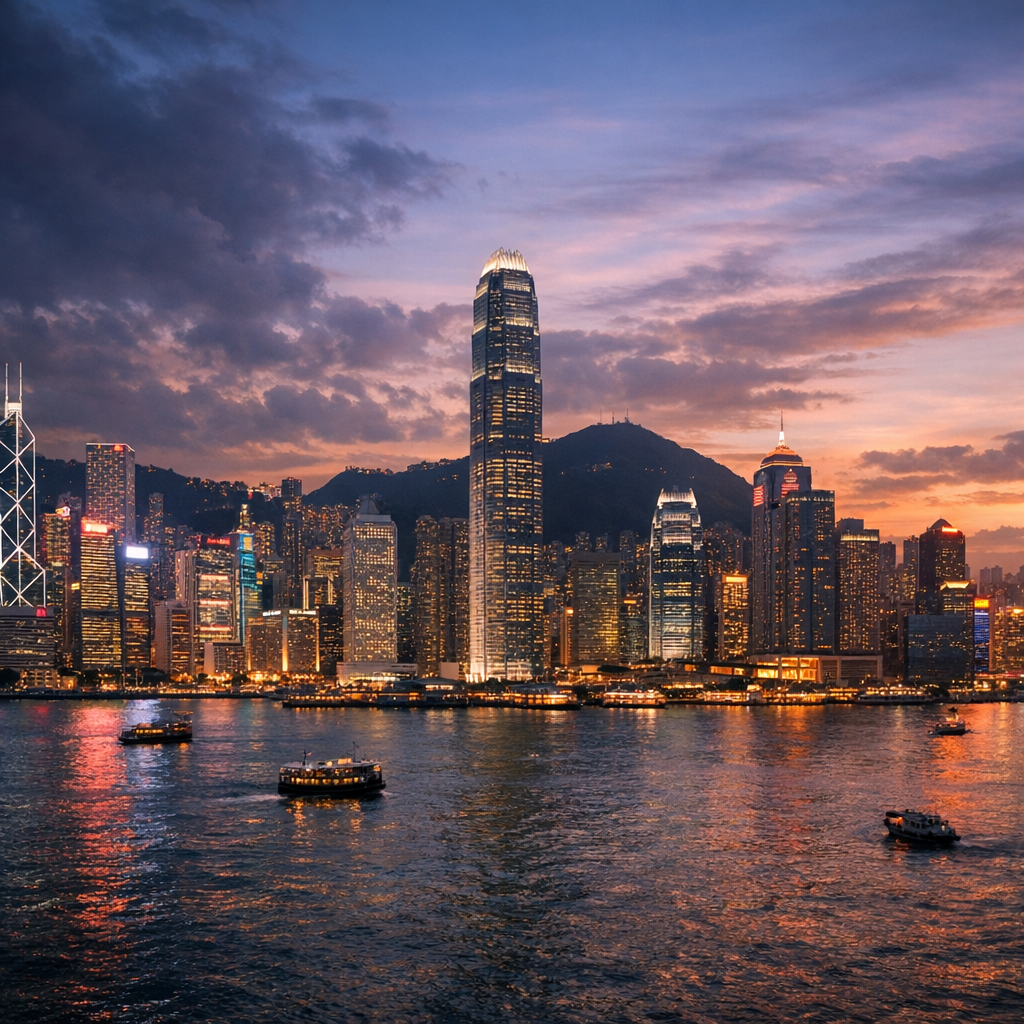
Hong Kong is a city that stacks worlds vertically — harbor-view cocktail bars 100 floors above noodle stalls that have been serving the same recipe for 60 years, and hiking trails that begin at metro stations. The food alone justifies the trip: more Michelin-starred restaurants per capita than anywhere on earth, plus a street-food and dai pai dong culture that makes the stars feel like a formality. This journey covers the skyline, the temples, the markets, the trails, and as much eating as one human body can reasonably manage.
Day 1
Arrival in Hong Kong
Private transfer from Hong Kong International Airport to The Peninsula Hong Kong, the "Grande Dame of the Far East" on the Tsim Sha Tsui waterfront since 1928 — the columned lobby where afternoon tea has been served for nearly a century, and your harbour-view suite frames the Hong Kong Island skyline across Victoria Harbour. Settle in with a jasmine tea in the lobby. Evening: welcome dinner at Lung King Heen at the Four Seasons, the world's first Chinese restaurant to earn three Michelin stars — the steamed lobster and scallop dumplings and the baked whole abalone in its shell are signature dishes, eaten with the harbour lights below.
- Stay: The Peninsula Hong Kong — Deluxe Harbour Suite, Tsim Sha Tsui
- Culinary: Lung King Heen three-Michelin-star dinner
Day 2
Hong Kong Island: Peak, Markets & Dim Sum
Morning Star Ferry across Victoria Harbour (8 minutes, one of the world's great commutes). Ride the Peak Tram to Victoria Peak for the panoramic city-harbour-mountain view. Descend to Central for a guided walk through the Mid-Levels escalators (the world's longest outdoor covered escalator system), Hollywood Road's antique shops, and Man Mo Temple (incense coils suspended from the ceiling, worshippers since 1847). Lunch: dim sum at Tim Ho Wan, the Michelin-starred stall that proved extraordinary food doesn't need white tablecloths — the baked BBQ pork buns are the signature. Afternoon: explore the PMQ creative hub (a former married police quarters turned design complex) or browse Cat Street's curio stalls. Evening: the Symphony of Lights show from the Tsim Sha Tsui promenade (nightly at 8 PM), followed by dinner at your pace.
- Scenic: Star Ferry, Peak Tram
- Cultural: Man Mo Temple, Mid-Levels, PMQ
- Culinary: Dim sum at Tim Ho Wan (Michelin-starred BBQ pork buns)
Day 3
Kowloon: Street Food, Markets & Temples
Morning at Wong Tai Sin Temple — the most visited Taoist temple in Hong Kong, where fortune-telling by shaking bamboo sticks (kau cim) draws thousands daily. Continue to the Chi Lin Nunnery, a wooden Tang-dynasty-style complex rebuilt without a single nail, adjacent to the Nan Lian Garden's immaculate bonsai and lotus ponds. Lunch: a guided street-food walk through Mong Kok — egg waffles from a cart, curry fish balls on sticks, cheong fun (rice noodle rolls with sweet soy), and milk tea from a cha chaan teng (Hong Kong-style diner). Afternoon: Temple Street Night Market (which actually starts in the afternoon) — fortune tellers, opera singers, and jade vendors. Evening: dinner at Yat Lok, the one-Michelin-star roast goose shop — the skin is lacquered and crackles, the meat is impossibly juicy, and the plum sauce is the only accompaniment needed.
- Cultural: Wong Tai Sin Temple, Chi Lin Nunnery
- Culinary: Mong Kok street-food tour, roast goose at Yat Lok (Michelin-starred)
Day 4
Lantau & Farewell
Morning ferry or MTR to Lantau Island. Ride the Ngong Ping 360 cable car above the South China Sea and Lantau's green mountains to the Tian Tan Buddha (Big Buddha), a 34-meter bronze statue on a hilltop. Walk through Ngong Ping Village to Po Lin Monastery for a vegetarian lunch at the monastery canteen — tofu, vegetables, and rice served communally, a practice unchanged for decades. Afternoon: for the active, a guided hike on the Lantau Trail (Section 2 — Sunset Peak for views across the airport and outer islands); for the leisurely, the fishing village of Tai O, where stilt houses line the creek and villagers sell dried seafood and shrimp paste. Return to Kowloon. Farewell dinner at Amber (the two-Michelin-star restaurant at The Landmark Mandarin Oriental) — Chef Richard Ekkebus's French-Japanese tasting menu is one of Asia's most celebrated.
- Cultural: Tian Tan Buddha, Po Lin Monastery
- Scenic: Ngong Ping 360 cable car
- Culinary: Monastery vegetarian lunch, farewell at Amber (two Michelin stars)
Day 5
Departure
Private transfer to Hong Kong International Airport. Your Byline concierge confirms flight details.
All accommodation at The Peninsula Hong Kong (Deluxe Harbour Suite). Private airport transfers. Local private guides for all scheduled touring days. Daily breakfast at hotel. Lung King Heen welcome dinner, Tim Ho Wan dim sum, Mong Kok street-food tour, Yat Lok roast goose, Po Lin Monastery lunch, and Amber farewell dinner. Star Ferry, Peak Tram, Man Mo Temple, Wong Tai Sin Temple, Chi Lin Nunnery, Ngong Ping 360, Tian Tan Buddha, and Temple Street market. Byline trip companion and 24/7 remote support throughout.
Every Byline journey is built to order — swap a hotel, add a day, tune the rhythm.
Customize This Journey