Vietnam: Hanoi, Ha Long Bay & Hoi An
Motorbike symphonies, emerald karst bays, and lantern-lit old towns — Vietnam's north-to-center corridor at the pace of a cyclo, not a tour bus
- Duration
- 9 Days / 8 Nights
- Destinations
- Hanoi · Ninh Binh · Ha Long Bay · Hue · Hoi An
- Best season
- October – April
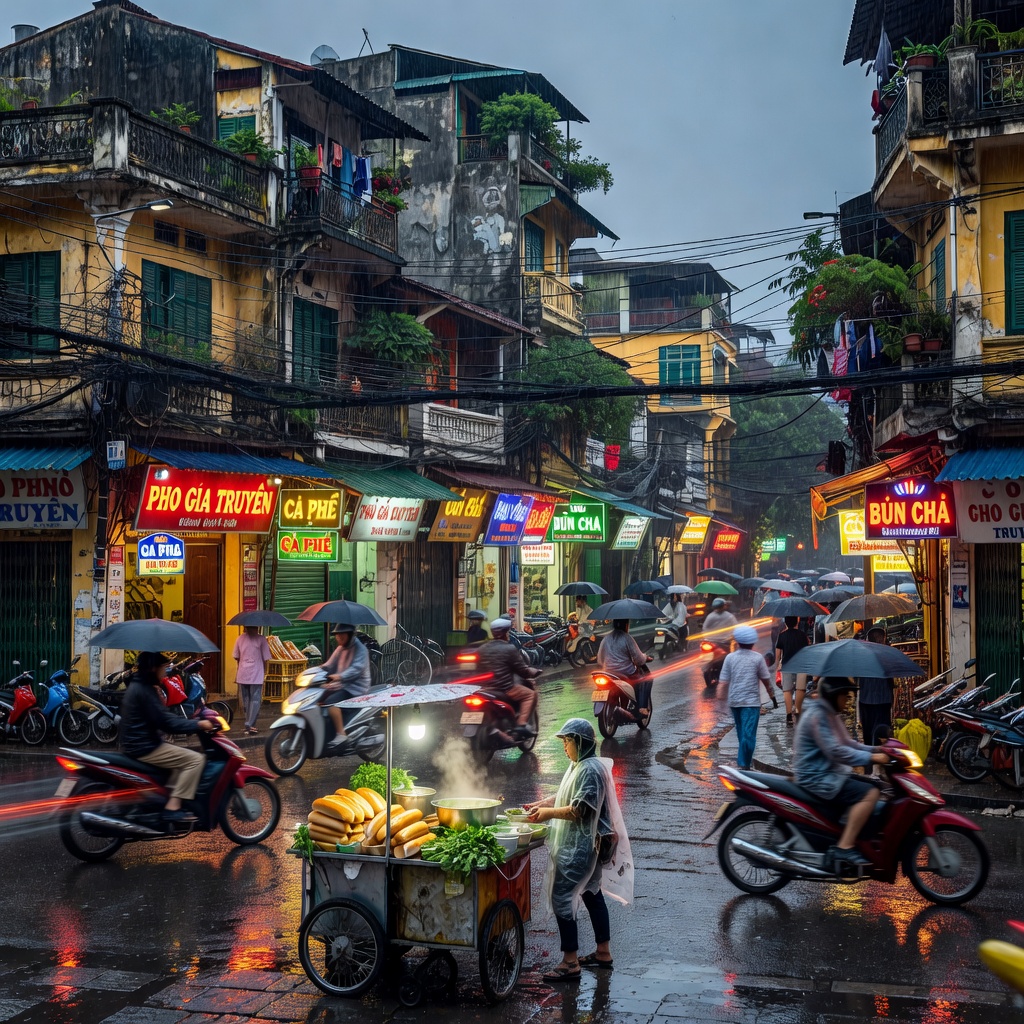
Vietnam rewards travelers who adjust to its rhythm — fast in the cities (motorbikes, street kitchens, commerce at every corner), slow on the water (karst-studded bays, delta rivers, fishing-village stillness), and somewhere in between in the old towns that preserve centuries of trade, war, and culture in their architecture. This journey moves from Hanoi's intoxicating chaos through Ha Long Bay's limestone silence to Hue's imperial gravity and Hoi An's tailoring-and-lantern charm.
Day 1
Arrival in Hanoi
Private transfer from Noi Bai Airport to Sofitel Legend Metropole Hanoi, the city's most iconic hotel — white colonial shutters, a central courtyard, and a history that includes Graham Greene, Joan Baez (who sheltered in the basement during the bombing of Hanoi), and visiting heads of state. Your heritage-wing suite preserves the original 1901 character. Evening: welcome dinner at Spices Garden, the hotel's Vietnamese restaurant — phở bò (Hanoi-style beef phở with star anise broth), bún chả (grilled pork with rice noodles, Hanoi's other signature dish), and a glass of Vietnamese coffee over ice.
- Stay: Sofitel Legend Metropole Hanoi — Grand Prestige Suite, Heritage Wing
- Culinary: Phở and bún chả welcome dinner at Spices Garden
Day 2
Hanoi: Old Quarter, Temples & Street Food
Your guide leads a morning walk through the Old Quarter's 36 streets — each historically named for the goods sold there (Silk Street, Silver Street, Paper Street). Visit the Temple of Literature (Vietnam's first university, founded 1070), the One Pillar Pagoda, and Hoan Kiem Lake with its island temple. Lunch: a guided street-food walk — egg coffee at Café Giảng (the original, since 1946), bánh cuốn (steamed rice rolls with pork and mushrooms), and bún riêu (crab-tomato noodle soup) — four stops across the Old Quarter. Afternoon: the Vietnam Museum of Ethnology for context on the country's 54 ethnic groups, or a water puppet show at Thang Long Theatre. Evening at leisure — your Byline concierge recommends Bia Hoi corner (fresh draft beer for 25 cents, poured from kegs onto plastic chairs on the sidewalk) for the most authentic Hanoi evening experience.
- Cultural: Temple of Literature, Old Quarter 36 streets walk
- Culinary: Guided street-food tour (egg coffee, bánh cuốn, bún riêu)
Day 3
Ninh Binh: Karst Valleys on Land
Private car south to Ninh Binh (90 minutes), often called "Ha Long Bay on land" for its limestone karsts rising from rice paddies. Boat through the Tam Coc river caves — your rower (using feet on the oars, a technique unique to this region) navigates through three grottoes as egrets fly overhead. Cycle through the valley past rice fields and water buffalo. Visit the ancient capital of Hoa Lu and the sprawling Bai Dinh Temple complex. Return to Hanoi or continue to Ha Long Bay.
- Scenic: Tam Coc boat through karst caves
- Cultural: Hoa Lu ancient capital
Day 4
Ha Long Bay: Overnight Cruise
Private transfer to Ha Long Bay (3.5 hours, or helicopter transfer for those short on time). Board a luxury junk-style cruise ship — Heritage Line's Ylang or similar — for an overnight voyage through 1,600 limestone islands and islets rising from emerald water. Afternoon: kayak through a hidden lagoon, visit a floating fishing village, and swim from a secluded beach. Sunset drinks on the deck as the bay turns to silhouette. Dinner aboard: Vietnamese seafood tasting menu — grilled Ha Long squid, steamed flower crab, and caramelized clay-pot fish.
- Stay: Heritage Line cruise — Premium suite
- Scenic: Ha Long Bay kayaking and swimming
- Culinary: Onboard Vietnamese seafood dinner
Day 5
Ha Long Bay to Hue
Morning tai chi on the sun deck as the bay emerges from mist. Disembark and transfer to the airport for a flight to Hue (90 minutes via Hanoi, or direct). Check into Azerai La Residence, a restored 1930s Art Deco villa on the banks of the Perfume River — one of Vietnam's most beautiful hotels, with a pool overlooking the river and the Citadel across the water. Afternoon: a guided tour of the Imperial Citadel — the Forbidden Purple City, the Noon Gate, and the royal theater where the last emperor watched court performances. Evening: a royal Hue dinner at Y Thao Garden — bánh khoái (Hue crispy pancakes), bún bò Huế (the fiery, lemongrass-scented beef noodle soup that originated here), and nem lụi (grilled pork on lemongrass skewers).
- Stay: Azerai La Residence, Hue — Riverview room
- Cultural: Imperial Citadel guided tour
- Culinary: Royal Hue cuisine at Y Thao Garden (bún bò Huế, bánh khoái)
Day 6
Hue: Tombs, Pagoda & the Perfume River
Morning boat ride on the Perfume River to Thien Mu Pagoda — seven tiers above the river, one of Vietnam's most iconic images. Continue by car to the royal tombs: Khai Dinh (elaborate, European-influenced, encrusted with porcelain mosaics), Minh Mang (classical, symmetrical gardens and lakes), and Tu Duc (romantic, overgrown, the emperor's retreat for poetry and concubines). Lunch at a garden house in Hue — the city has a tradition of private dining in restored mandarin residences, where multi-course meals follow the imperial court's presentation standards. Afternoon: browse the Dong Ba Market for conical hats, Hue sesame candy, and dried chili pastes. Evening at leisure.
- Cultural: Perfume River boat, Thien Mu Pagoda, and three royal tombs
- Culinary: Imperial garden-house lunch
Day 7
Hue to Hoi An: The Hai Van Pass
Private car over the Hai Van Pass — the dramatic mountain road that separates Vietnam's north and south climates, with switchbacks, military bunkers, and views across both coastlines. (If you prefer, the new tunnel is faster but misses the view.) Stop in Danang to see the Marble Mountains — five limestone and marble hills with cave temples and a viewpoint. Continue to Hoi An (30 minutes south). Check into Anantara Hoi An, a riverside boutique hotel in a converted French-colonial villa at the edge of the old town. Evening: walk the Ancient Town's lantern-lit streets — the Japanese Covered Bridge, the merchant houses, and the tailor shops that draw visitors from around the world. Dinner at Morning Glory, Chef Trinh Diem Vy's restaurant celebrating central Vietnamese street food elevated to restaurant form — cao lầu (Hoi An's signature thick noodle with pork and herbs, made only with water from a specific local well), white rose dumplings, and fried wonton.
- Stay: Anantara Hoi An — Riverview suite
- Scenic: Hai Van Pass drive
- Culinary: Morning Glory dinner (cao lầu, white rose dumplings)
Day 8
Hoi An: Tailoring, Cooking & Lanterns
Morning: a private cooking class beginning at the Hoi An central market — select herbs, vegetables, and seafood, then learn to prepare fresh spring rolls, bánh xèo (sizzling turmeric crepes), and mango salad at a riverside cooking school. Eat your work for lunch. Afternoon: the tailor shops — Hoi An can produce custom suits, dresses, and shoes in 24-48 hours. Your Byline concierge has vetted recommendations based on what you want made. Browse the galleries, silk workshops, and the Museum of Trade Ceramics in the old town. Evening: hire a wooden boat for a lantern-release on the Thu Bon River — the floating lanterns at dusk are Hoi An's most photographed moment. Farewell dinner at The Field, a farm-to-table restaurant on the rice fields outside town — the night-heron sounds and the candlelight are as memorable as the food.
- Culinary: Cooking class with market visit, farewell dinner at The Field
- Cultural: Tailoring, silk workshops, and lantern-release on Thu Bon River
Day 9
Departure
Private transfer to Danang Airport (30 minutes) for your onward flight. Your Byline concierge confirms logistics.
All accommodation at handpicked properties (Sofitel Metropole Hanoi, Heritage Line Ha Long Bay cruise, Azerai La Residence Hue, Anantara Hoi An). Domestic flights Hanoi–Hue (or Ha Long–Hue). Private transfers throughout including Hai Van Pass. Local private guides for all scheduled touring days. Daily breakfast plus Ha Long Bay meals. Metropole welcome dinner, Hanoi street-food tour, Ha Long Bay dinner, Hue royal cuisine dinners, Hoi An cooking class, and The Field farewell dinner. Temple of Literature, Old Quarter walk, Ninh Binh day trip, Ha Long Bay cruise, Imperial Citadel, Royal Tombs, Marble Mountains, and Hoi An Ancient Town. Byline trip companion and 24/7 remote support throughout.
Every Byline journey is built to order — swap a hotel, add a day, tune the rhythm.
Customize This Journey