Goa: Spice, Sand & Portuguese Echoes
Laterite churches, cashew feni, and beaches that range from party to paradise — India's smallest state with its most layered identity
- Duration
- 6 Days / 5 Nights
- Destinations
- Panjim · Old Goa · South Goa beaches · Spice Plantations
- Best season
- November – March
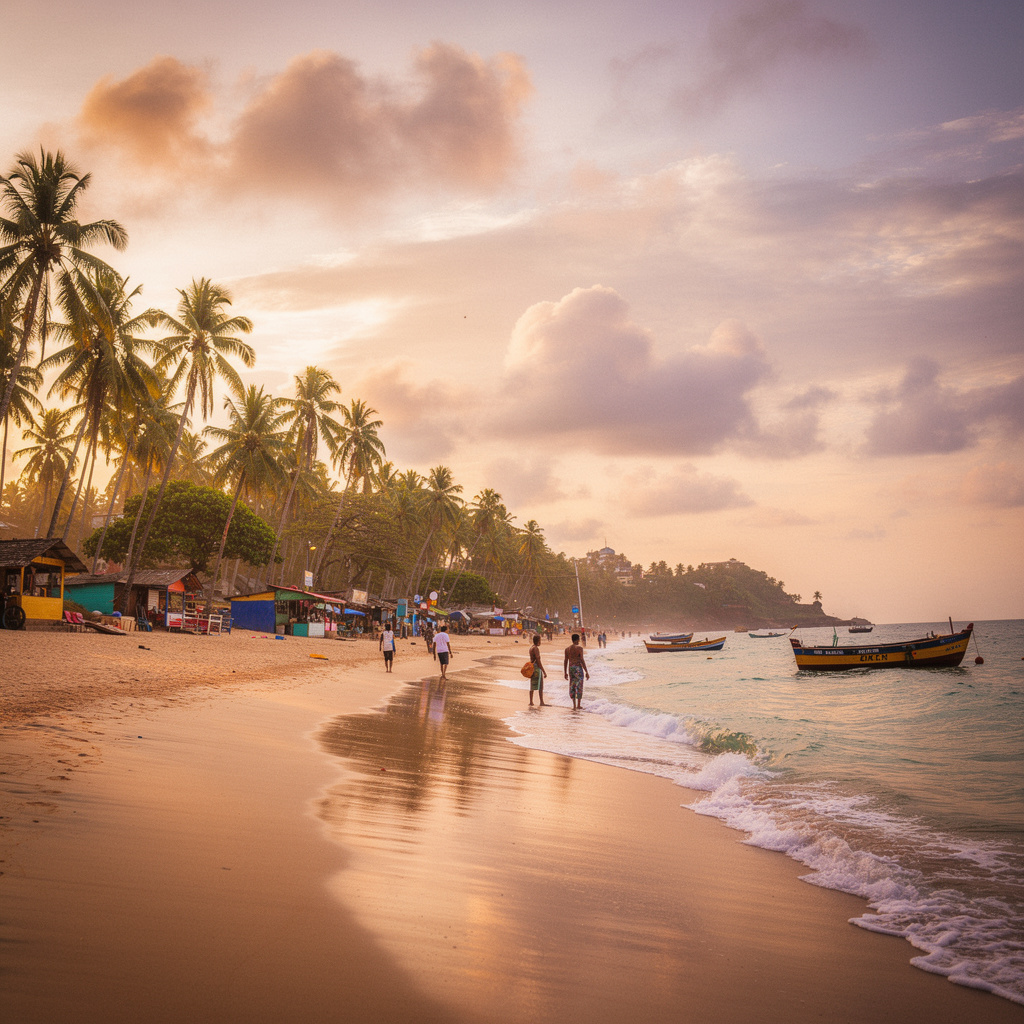
Goa is India's most misunderstood destination — it's not just beaches and trance music, though those exist. It's a place where 450 years of Portuguese colonialism left behind Baroque churches (UNESCO-listed), a cuisine that fuses vindaloo (from the Portuguese vinha d'alhos) with coconut and kokum, and a culture of sossegado (a Portuguese-Konkani word meaning easy-going contentment) that persists in the state's family-run tavernas and afternoon siestas. This journey moves from Panjim's colonial quarter through Old Goa's cathedrals to the South Goa beaches, with spice-plantation and cooking detours.
Day 1
Arrival in Goa
Fly into Dabolim Airport. Private transfer to Ahilya by the Sea, a boutique hotel on a clifftop in South Goa — a restored Indo-Portuguese mansion with an infinity pool overlooking the Arabian Sea, rooms of antique furniture and local art, and a host-family warmth. Evening: welcome dinner at the hotel — Goan fish curry (coconut, kokum, and red chili), prawn balchão (tangy, fiery, pickled), and bebinca (a 16-layer Goan coconut cake that takes hours to make).
- Stay: Ahilya by the Sea — Sea-view room, South Goa
- Culinary: Goan fish curry, prawn balchão, and bebinca welcome dinner
Day 2
Panjim & Old Goa: Colonial Heritage
Morning drive to Panjim, the state capital — walk the Fontainhas Latin Quarter, where pastel Portuguese houses line narrow streets and tile-fronted tavernas serve feni (cashew spirit) and pork sorpotel. Visit the Church of Our Lady of the Immaculate Conception (the whitewashed, wedding-cake facade). Continue to Old Goa (10 minutes east), the former Portuguese capital — the Basilica of Bom Jesus (housing the remains of St. Francis Xavier), Sé Cathedral (the largest church in Asia when built), and the Church of St. Francis of Assisi. Your guide explains the Inquisition history that darkens the beauty. Lunch at Venite, a first-floor restaurant on a Panjim street with balcony tables — chicken cafreal (marinated in green masala, pan-fried), Goan sausage pao, and a cold Kingfisher. Afternoon: explore Panjim's bookshops and bakeries. Evening at leisure.
- Cultural: Fontainhas Latin Quarter, Basilica of Bom Jesus, Sé Cathedral
- Culinary: Panjim lunch at Venite (chicken cafreal, Goan sausage)
Day 3
Spice Plantation & Cooking Class
Morning visit to a spice plantation in the Ponda region (1 hour) — walk through growing cardamom, vanilla, cinnamon, pepper, nutmeg, and areca nut with a guide who explains each plant's use in Goan cooking and Ayurvedic medicine. Lunch at the plantation: a traditional Goan thali served on a banana leaf. Afternoon: a private Goan cooking class at a family home — prepare vindaloo (the real version, with toddy vinegar and Kashmiri chili, not the British curry-house interpretation), fish recheado (stuffed mackerel with red masala), and sannas (fermented rice cakes). Evening: your dinner is what you've cooked, served in the family's garden.
- Cultural: Spice plantation guided tour
- Culinary: Plantation thali lunch, private Goan cooking class (vindaloo, recheado, sannas)
Day 4
South Goa Beaches: At Leisure
A free day on the South Goa coast. Your Byline companion can arrange: a morning at Palolem Beach (crescent-shaped, calm water, kayak to Butterfly Beach); a boat trip for dolphin-spotting at dawn; a visit to Cabo de Rama fort (Portuguese ruin on a cliff above the sea); or a day of ayurvedic spa treatments at the hotel. Lunch at a beach shack — fried calamari, kingfish tandoori, and naan, feet in the sand. This is the day that earns Goa its sossegado reputation.
- Optional: Palolem Beach, dolphin boat, Cabo de Rama fort, ayurvedic spa
Day 5
Markets, Feni & Farewell
Morning visit to the Mapusa Friday Market (or Anjuna Flea Market on Wednesday) — the real Goan market experience, where spices, dried fish, cashews, and local pottery compete for space with textile vendors and fruit sellers. Visit a feni distillery for a private tasting of cashew feni and coconut feni — the production process (foot-crushing the cashew apple, single and double distillation in copper pots) is fascinatingly artisanal. Afternoon at leisure. Farewell dinner at Gunpowder, a restaurant in Assagao serving South Indian and Goan food in a garden setting — appam with stew, pandi curry (Coorgi pork), and a kokum sherbet.
- Cultural: Mapusa market, feni distillery
- Culinary: Feni tasting, farewell dinner at Gunpowder
Day 6
Departure
Private transfer to Dabolim Airport. Your Byline concierge confirms flight details.
All accommodation at Ahilya by the Sea (Sea-view room). Private airport and intercity transfers. Local guides for all scheduled touring days. Daily breakfast at hotel. Goan welcome dinner, Venite lunch, spice-plantation thali, cooking class dinner, and Gunpowder farewell dinner. Fontainhas, Old Goa churches, spice plantation, cooking class, and feni distillery. Byline trip companion and 24/7 remote support throughout.
Every Byline journey is built to order — swap a hotel, add a day, tune the rhythm.
Customize This Journey