Nepal: Ghandruk Trek & the Annapurna Foothills
Rhododendron forests, Gurung villages, and Himalayan giants visible from your teahouse window — a moderate trek through Nepal's most rewarding landscape
- Duration
- 8 Days / 7 Nights
- Destinations
- Kathmandu · Pokhara · Ghandruk · Poon Hill
- Best season
- October – November / March – April
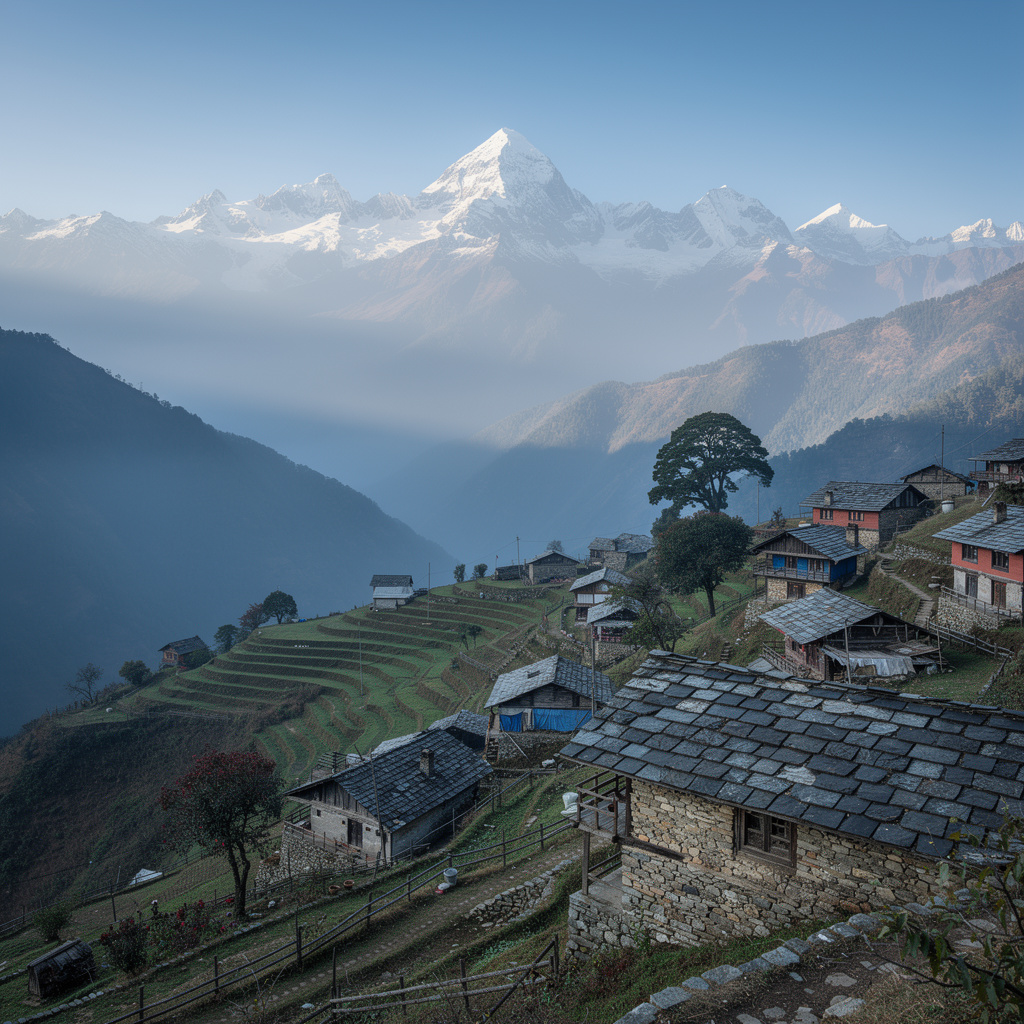
The Ghandruk Trek is Nepal's most accessible Himalayan experience — a moderate 4–5 day trek through terraced rice paddies, rhododendron forests, and Gurung ethnic villages with lodges (teahouses) that provide beds, meals, and the hospitality that makes Nepal famous. The views include Annapurna South, Machhapuchhre (Fishtail), and Dhaulagiri, and the optional Poon Hill sunrise (3,210 meters) is one of the world's great dawn panoramas. No camping, no technical climbing — just walking, breathing, and looking up.
Day 1
Arrival in Kathmandu
Fly into Tribhuvan Airport. Private transfer to Dwarika's Hotel, a heritage property built from salvaged 13th-century Newari woodcarvings — every window frame, door, and courtyard column is a preserved piece of Kathmandu Valley artistry. Evening: welcome dinner at Krishnarpan, the hotel's Nepali fine-dining restaurant — a multi-course Nepali tasting menu served on brass plates with dal, tarkari, achar, and momos, accompanied by explanations of each dish's cultural significance.
- Stay: Dwarika's Hotel — Heritage suite, Kathmandu
- Culinary: Krishnarpan Nepali tasting dinner
Day 2
Kathmandu: Temples & Stupas
Morning guided tour: Boudhanath Stupa (one of the largest Buddhist stupas in the world, where Tibetan monks circle chanting and prayer flags stretch in every direction), Pashupatinath Temple (the holiest Hindu temple in Nepal, with cremation ghats on the Bagmati River), and Patan Durbar Square (the Newari architectural masterpiece). Lunch at a Kathmandu café: Newari beaten rice with spiced buffalo meat and achar (pickle). Afternoon: flight to Pokhara (25 minutes, window seats on the right for Himalayan views). Check into Tiger Mountain Pokhara Lodge, a stone-and-thatch lodge on a hilltop above Phewa Lake with views of the Annapurna range. Evening at leisure.
- Stay: Tiger Mountain Pokhara Lodge — Mountain-view room
- Cultural: Boudhanath, Pashupatinath, Patan Durbar Square
Day 3
Pokhara to Nayapul: Trek Begins
Drive to Nayapul (1.5 hours), the trailhead. Begin trekking with your guide and porter (porters carry the heavy bags — you carry a daypack). Walk through rice-paddy terraces and subtropical forest to Tikhedhunga, then climb the famous stone staircase to Ulleri (2,070 meters). The trail is well-marked and busy enough to feel safe, quiet enough to feel wild. Check into a teahouse in Ulleri — simple rooms with beds, blankets, and a dining hall where trekkers share dal bhat (lentil soup, rice, and vegetable curry — the fuel of the Himalayas). First mountain views appear.
- Trekking: Nayapul to Ulleri (5–6 hours, ascending)
- Culinary: Teahouse dal bhat dinner
Day 4
Ulleri to Ghorepani: Rhododendron Forest
Walk through the rhododendron forest that blankets the hillsides between 2,000 and 3,000 meters — in March-April, the trees bloom in crimson, pink, and white, creating one of the most spectacular forest walks on earth. Arrive in Ghorepani (2,860 meters), a ridge-top village with lodges facing the Annapurna and Dhaulagiri ranges. Check into a teahouse. Afternoon at leisure — rest, acclimatize, and watch the mountains change color as the light shifts. Evening: dal bhat and momos (Nepali dumplings) in the dining hall as trekkers compare notes.
- Trekking: Ulleri to Ghorepani (5–6 hours, through rhododendron forest)
Day 5
Poon Hill Sunrise & Ghandruk
3:45 AM wake-up. Hike to Poon Hill (3,210 meters, approximately 1 hour) for sunrise — the panorama includes Dhaulagiri (8,167m), Annapurna I (8,091m), Annapurna South, Machhapuchhre, and dozens of lesser peaks, all glowing pink-gold as the sun rises behind you. It is one of the world's great dawn views. Return to Ghorepani for breakfast, then descend through stone-stepped trails to Ghandruk (1,940 meters), one of the Annapurna region's largest Gurung villages — stone houses with slate roofs, a village museum explaining Gurung culture and Gurkha military history, and mountain views from every terrace. Check into a comfortable teahouse or community lodge.
- Scenic: Poon Hill sunrise panorama (Dhaulagiri, Annapurna, Machhapuchhre)
- Cultural: Ghandruk Gurung village and museum
- Trekking: Ghorepani to Ghandruk (5–6 hours, descending)
Day 6
Ghandruk to Nayapul: Trek Ends
Final trekking day — descend through terraced fields and river crossings to Nayapul (4–5 hours). Private car back to Pokhara. Afternoon: a well-earned swim in Phewa Lake or a massage at a Pokhara lakeside spa. Evening: farewell trek dinner at a Pokhara restaurant — Thakali thali (the cuisine of the Thak Khola valley on the Annapurna circuit, considered Nepal's finest regional food), local Everest beer, and a window facing the now-familiar Annapurna range.
- Trekking: Ghandruk to Nayapul (4–5 hours, descending)
- Culinary: Thakali thali farewell dinner
Day 7
Pokhara: At Leisure
A rest day in Pokhara. Your Byline companion can arrange: a sunrise flight over the Himalayas (Yeti Airlines' mountain flights circle Annapurna and Machhapuchhre at close range); paragliding from Sarangkot (tandem, no experience needed, landing at the lakeside); a visit to the International Mountain Museum; or a boat ride on Phewa Lake to the Peace Pagoda on the far shore. Evening at leisure at the lodge.
- Optional: Himalaya sunrise flight, paragliding, Phewa Lake boat
Day 8
Return to Kathmandu & Departure
Morning flight to Kathmandu (25 minutes). Depending on your departure time: revisit Thamel for last-minute shopping (pashmina, singing bowls, thangka paintings), or visit the Swayambhunath Stupa (the "Monkey Temple" above the valley). Private transfer to the airport. Your Byline concierge confirms international flight details.
All accommodation (Dwarika's Hotel Kathmandu, Tiger Mountain Lodge Pokhara, teahouses on trek). Domestic flights Kathmandu–Pokhara and return. Private transfers and trek transport. Licensed trekking guide and porter. Daily breakfast plus all meals on trek. Krishnarpan welcome dinner and Thakali farewell dinner. Kathmandu temple tours, Annapurna Conservation Area permit, and TIMS trekking permit. Byline trip companion and 24/7 remote support.
Every Byline journey is built to order — swap a hotel, add a day, tune the rhythm.
Customize This Journey