Back to Blog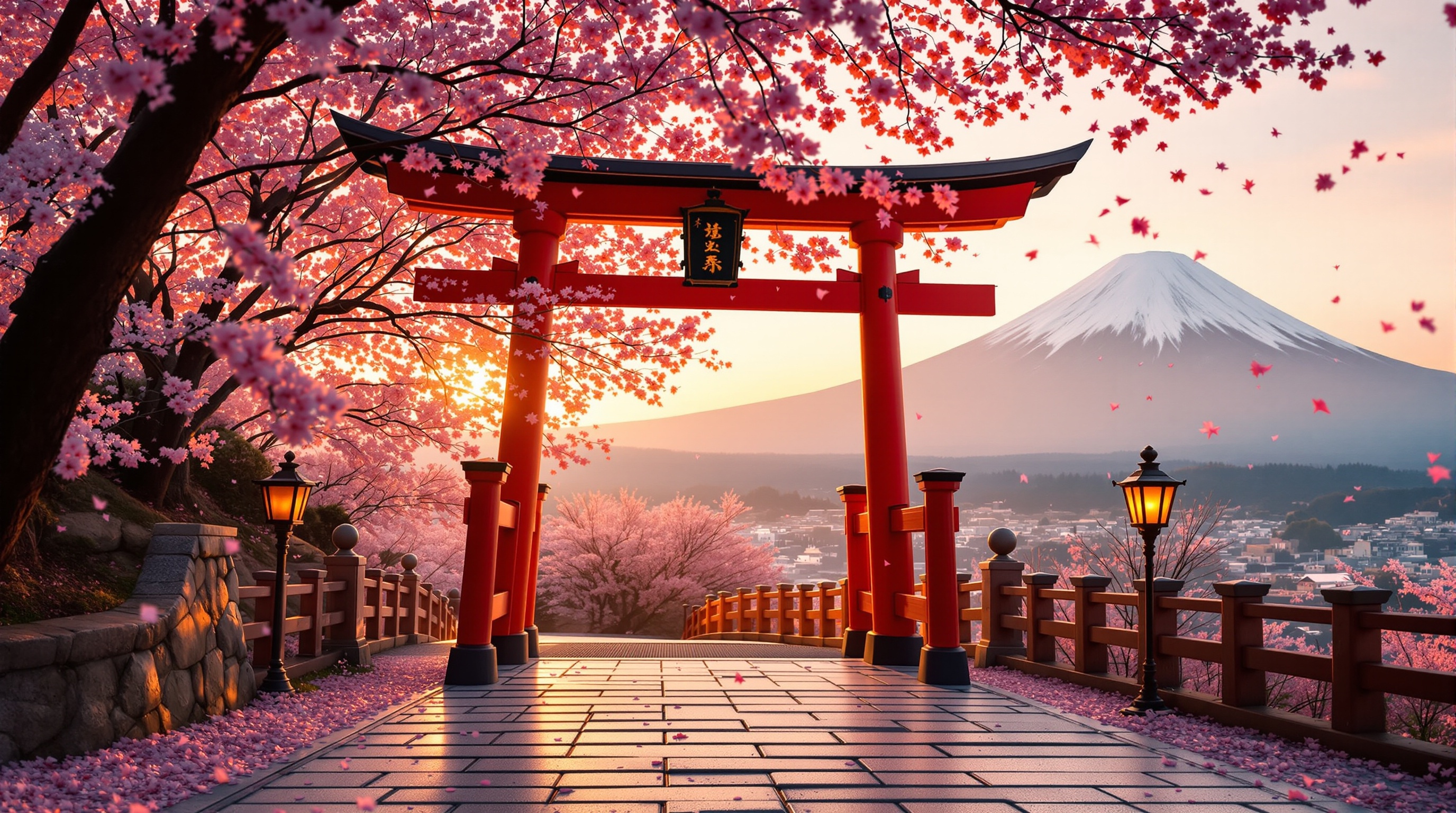
JapanTokyoKyotodestination guidebusiness classaward travelAsiapoints redemption
Get Me To Japan: How to Fly Business Class to Tokyo for Under 60,000 Points
Byline Travel2026-04-058 min read
Loading…
There is a moment on the Narita Express when the city lights smear into gold ribbons and you remember why people say Japan hits different. Neon, order, ramen steam curling under a convenience-store awning, the faint chime of a train door — it is not one thing; it is a hundred small perfections arriving at once. If you have ever stared at a spreadsheet of points balances and wondered what they are for, this is the answer: a business-class seat across the Pacific, a skyline that looks like the future, and temple quiet so deep you can hear your own pulse.
Japan rewards travelers who plan — not because the country is unfriendly (it is the opposite), but because the best experiences sit at the intersection of timing, trains, and intention. Tokyo is velocity and taste; Kyoto is moss, cedar, and the slow arc of an afternoon. Together they are the classic first-timer’s arc: land in the electric capital, ride the Shinkansen through the countryside, and let Kyoto remind you that modern Japan still knows how to whisper.
Star Alliance and Oneworld both send premium cabins to Tokyo in volume; hotels anchor Shinjuku and Higashiyama; the rail network shrinks Tokyo–Kyoto to a morning. You are not chasing a unicorn — you are picking among strong options.
If your goal is business class to Tokyo without draining seven figures in points, start with the partnerships travelers actually book: ANA via Virgin Atlantic Flying Club, United MileagePlus, and Air Canada Aeroplan on Star Alliance; Japan Airlines via British Airways Executive Club (Avios) and American Airlines AAdvantage on Oneworld. Availability moves with seasons and how far out you search, but the math below is the framework people use when they say “I booked Japan in J.”
| Route idea | Program & partner | What to expect (one-way business, illustrative) | Why it matters |
|---|---|---|---|
| US West Coast → Tokyo | Virgin Atlantic → ANA | Often 45,000 Virgin points + taxes/fees | A famous sweet spot when saver-style inventory appears; West Coast zones track lower on the chart |
| US → Tokyo (flexible origins) | United → ANA or other Star partners | Commonly 88,000 United miles + taxes/fees | Easier search tools and lots of Star Alliance access; worth comparing to Virgin if you hold both |
| US → Tokyo | Air Canada Aeroplan → Star partners | Often 75,000– range + taxes/fees depending on origin band | Useful if you like Aeroplan’s routing rules and transfer bonuses from bank points |
| US West Coast → Tokyo | British Airways Avios → JAL | Distance-based; many US–Tokyo runs land around 77,250 Avios + fees in business | A strong Oneworld play when JAL releases seats; Avios are easy to top up |
| US → Tokyo | American Airlines → JAL | Variable saver levels; compare to Avios for the same flight | Good if you are already deep in AAdvantage and want a single-program ticket |
Search wide (two-week windows), prioritize directs, then compare Virgin vs United vs Aeroplan on ANA and Avios vs AAdvantage on JAL. For business under 60,000 points, Virgin’s ANA rates are the headline — inventory decides. Flexibility wins.
Park Hyatt Tokyo (Shinjuku) remains the poster child for a points-funded Tokyo dream: World of Hyatt Category 7, typically 25,000–35,000 points per night depending on off-peak, standard, and peak pricing. High floors, Mount Fuji on a clear day, and that pool skyline view that feels stolen from a film. It is not “cheap on points,” but it is the kind of redemption you remember in winter when work gets loud.
Andaz Tokyo Toranomon Hills — also Category 7 and the same 25,000–35,000 points band — trades Shinjuku nostalgia for a sleek Toranomon lens on the city. If you want design-forward spaces, a breakfast spread you will photograph, and Ginza within reach, this is the modern counterpoint to the Park Hyatt’s cinematic classicism.
Hyatt Regency Kyoto sits at Category 5, often 17,000–23,000 points per night across off-peak/standard/peak — a relative value play in a city where cash rates spike during cherry blossoms and autumn maples. The property works beautifully as a base for Higashiyama wanders: temples, philosopher’s paths, and the gentle discipline of Kyoto afternoons.
Top ryokans are often cash or hybrid stays outside chains — still, Hyatt makes Kyoto + Tokyo workable without juggling a dozen programs.
Tokyo — controlled chaos on purpose. Stand above the scramble at Shibuya Crossing, then escape vertical Japan with a coffee on a quiet side street. Dive Tsukiji Outer Market or the newer Toyosu edges for sushi logic — not just a meal, a rhythm. Book one “fancy” dinner and one izakaya night where the menu is half instinct; Tokyo rewards contrast.
Kyoto — time made visible. Fushimi Inari at opening hour is worth the alarm; the vermillion gates are a meditation in motion. Kinkaku-ji and Ginkaku-ji bracket different kinds of beauty — gold flash versus restrained silver intention. Leave room for Arashiyama bamboo and a slow walk along the river, and consider one temple where you do nothing but sit.
Between cities — the Shinkansen is the experience. Buy a Japan Rail Pass only if the math works for your itinerary; many Tokyo–Kyoto round trips plus local JR rides make it sensible, but point-to-point tickets can win for tight plans. The train itself is a reason to travel: punctual, clean, and almost unsettlingly calm.
Ryokan and onsen — plan at least one slow night. Even if your hotel is Western-style in Kyoto, schedule a rural or neighborhood onsen day trip if you can — rules, slippers, and the social contract of the bath are part of the story.
The Japan Rail Pass is sold as a near-mandatory purchase for first-timers, but for a straightforward Tokyo–Kyoto trip it often doesn't pencil out.
Here's the honest math for a common first-timer itinerary:
| Journey | Approximate cash price (2026) |
|---|---|
| Tokyo → Kyoto (Shinkansen, Nozomi) | |
| Kyoto → Tokyo (return) | |
| Airport express (Narita/Haneda round-trip) | |
| 2–3 local JR day trips from Kyoto | |
| Approximate total | ~$260–$310 |
A 7-day JR Pass costs around ¥50,000 (~$335). For the itinerary above, that's breakeven at best, and you haven't used a single bullet train on non-JR tracks (the Shinkansen Nozomi, the fastest service, is not covered by the standard JR Pass anyway — you'd need the slower Hikari or Kodama).
When the JR Pass genuinely wins: 3+ Shinkansen legs, side trips to Hiroshima or Osaka, or heavy travel in a 7-day window. When it doesn't: a clean Tokyo–Kyoto–Tokyo trip with light local movement. Do the math for your specific itinerary before you buy.
Byline Tip: Build your Japan trip in Byline Travel as a living itinerary — forward flight and hotel confirmations, drop Tokyo and Kyoto days onto the timeline, and let Byline keep trains, check-ins, and restaurant holds in one calm view. When your points booking finally clears, your trip should be ready to go, not stuck in twenty browser tabs.
Japan is a sequence of good decisions: the business-class seat, the Hyatt skyline night, the temple morning that costs only attention. Get those right and you will land home already sketching trip two — a little more Japanese, a lot more confidence.