Back to Blog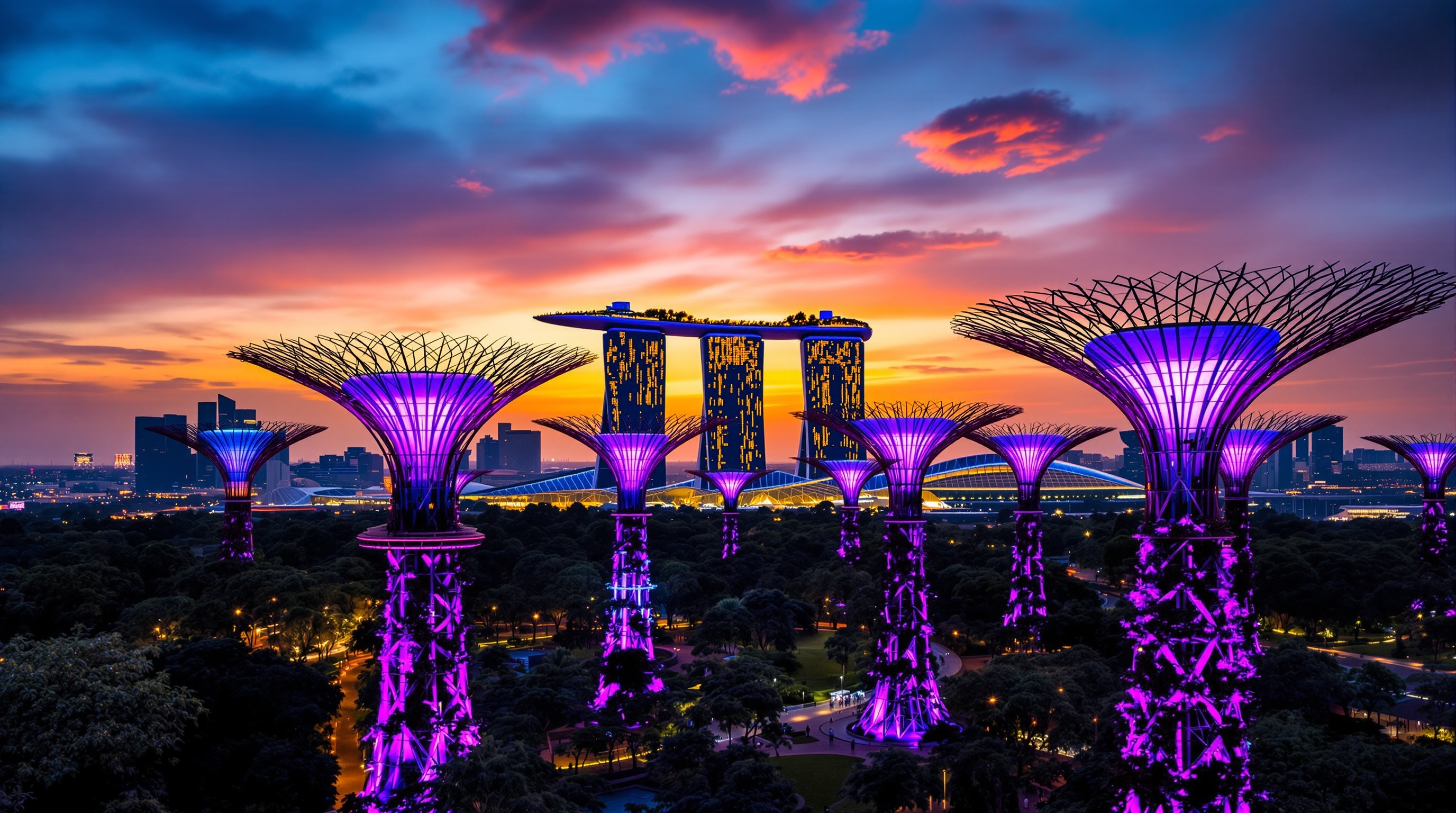
layoverscity escapestravel tipsmini vacations
Your Layover Is a Secret City Trip — You Just Don't Know It Yet
Byline Travel Team2025-12-0414 min read
Loading…
Let me describe a very familiar feeling. You're sitting in Seat 28C somewhere over the Atlantic, and your phone shows that the connection you booked in Frankfurt has stretched to nine hours. The groan is audible. You start doing the math on airport lounges, the price of a terminal burger, and whether you can fall asleep across three chairs in Gate B22.
Here's the reframe that changes everything: nine hours in Frankfurt is a morning in the Altstadt. It's apple wine at a riverfront cafe, a tram to the old opera house, and back through the airport door before your gate is even posted. The layover didn't change. What changes is whether you treat it as a sentence or a gift.
This guide is about how to turn any long layover — confidently, safely, and without the white-knuckle panic of wondering if you'll make your flight — into a proper city experience. We'll cover the decision framework, the logistics stack that makes it work, the exact time buffers you need, and the one thing most travelers forget that ruins everything.
"Nine hours in Frankfurt is a morning in the Altstadt. The layover didn't change — what changes is whether you treat it as a sentence or a gift."
The problem is framing. Layovers exist in mental limbo — you're in transit, neither here nor there, in a kind of suspended animation between the place you left and the place you're going. The airport reinforces this: strip lighting, recycled air, a departures board that reminds you this is temporary.
But that liminal quality is actually the feature. You're being deposited in a city with your bags taken care of, no hotel check-in to worry about, and a hard deadline that forces you to do the one thing most travelers procrastinate on: actually leave the building and go see something.
The travelers who do this well have internalized one truth: the airport will always be there when you get back. The variable isn't whether to go — it's how much time you have and how to configure the logistics around that time window.
Not every layover is a sightseeing opportunity. A 90-minute domestic connection is a sprint to the gate, not a cultural expedition. The decision about whether to leave — and what to do if you do — is entirely determined by how many hours you have.
| Time Window | Leave? | What to Do | Return Buffer |
|---|---|---|---|
| Under 2 hrs | Stay in | Terminal mode: lounge, food, rest. No exceptions. | — |
| 2 – 3 hrs | Borderline | Domestic only, familiar airports, transit under 15 min. Nearby meal at most. | 90 min before gate |
| 3 – 5 hrs | Yes — focused | 1–2 nearby landmarks. Express airport rail. One sit-down meal. | 2 hrs (domestic) / 2.5 hrs (intl) |
| 5 – 8 hrs | Yes — half day | One focused neighborhood. 2–3 sights plus a proper meal. | 2.5 hrs before gate |
| 8 – 10 hrs | Yes — plan it |
A few things worth noting. First, the international/domestic distinction matters enormously in the sub-5-hour range. Re-clearing customs and immigration adds 45–90 minutes to your logistics, which can vaporize a short layover. Second, the 10–14 hour window is labeled a "full day trip" because it genuinely is one, if you execute it right. And third: once you're above 14 hours, stop calling it a layover. You're doing a stopover. Plan accordingly.
Byline Tip: Tell Byline's trip companion your connection time and layover city — "8-hour layover in Singapore" — and it will suggest a focused half-day itinerary calibrated to your time window, including transit estimates back to the airport.
Most travelers who've attempted and failed at layover sightseeing hit the same wall: logistics friction. They're dragging a 25kg suitcase through the streets of Amsterdam. They've been on a plane for 11 hours and can't face a museum without a shower. They don't know which train to take and burn 40 minutes figuring it out at the station.
None of this is the city's fault. It's a planning gap. Here are the three things to sort before you ever leave the terminal.
This is non-negotiable. Dragging luggage through a city transforms an adventure into a chore. Most major international airports have dedicated luggage storage facilities — they're usually near the arrivals hall or main transit hub, cost around 5–12 euros per bag per day, and are dramatically underused by travelers who don't know they exist.
Third-party networks like Bounce, LuggageHero, and Stasher now operate in hundreds of cities, storing bags at partner hotels, shops, and cafes for a few dollars an hour. Many are open 24/7 and let you book ahead on your phone.
The rule: Before you look at a single museum or restaurant recommendation, confirm where you're storing your luggage and how long it takes to get there from your gate. That's step one, always.
If your layover is 8 hours or longer, there is one upgrade that transforms the entire experience: a day-use hotel room. Most major airport-adjacent hotels rent rooms by the block — morning, afternoon, or full day — for a fraction of the overnight rate. You get a real shower, a bed to rest on for an hour, a safe place to leave your bags, and you step off the plane and back into being a human being rather than a passenger.
Platforms like Dayuse.com, HotelsByDay, and YOD aggregate these bookable windows. A 6am–2pm window at an airport-adjacent hotel in Singapore, Amsterdam, or Istanbul typically runs $40–80 — less than a business class lounge day pass, and infinitely more restorative.
When you book a day-use room, the sequence becomes genuinely luxurious:
That's a 10-hour layover in Singapore where you visit Gardens by the Bay, eat at a hawker centre, and board your next flight having actually experienced one of the world's great cities.
Byline Tip: Forward your day-use hotel confirmation to your Byline workspace. The check-in window, hotel address, and any reference codes land on your layover timeline — so you're not digging through email after a 12-hour flight.
The traveler who figures out the transit at the airport exit is the traveler who loses 40 minutes and adds unnecessary stress. The traveler who looked it up three days ago walks straight to the express train and is in the city center before the other person has found the ticket machine.
The world's best-connected airports make this almost embarrassingly easy. Singapore Changi's MRT puts you in the city in 30 minutes. Heathrow Express reaches Paddington in 15. Amsterdam Centraal is a direct 17-minute train from Schiphol. Tokyo's Narita Express gets to Shinjuku in 80 minutes.
Know your city, know your ride, know the frequency.
International visa check: Some countries require a transit visa to leave the airport, even if you're not staying overnight. Always check the visa rules for your nationality at your layover country before assuming you can walk out the door. This applies most commonly in China, India, Russia, and certain Middle Eastern hubs — but rules change, so verify for every trip.
Here is the single most important section of this guide. Everything else is optional enrichment. The padding formula is mandatory — it is the entire reason this works without becoming a disaster.
The mistake people make is thinking about the connection in reverse from the wrong moment. They think: "I need to be at the gate by 5:30pm." And then they plan city activities until 5pm and assume the math works. It doesn't — because they forgot about the transit back to the airport, the security queue, the walk from security to the gate, and the fact that queues and transport are both variable.
The correct calculation:
City Departure Time = Gate Close - Security/Immigration - Gate Walk - Transit to Airport - Safety Cushion
| Component | Domestic | International |
|---|---|---|
| Transit back to airport | Variable — use real-time, not Google Maps default | Variable |
| Security / re-immigration | 25–35 min | 60–90 min |
| Walk from security to gate | 10–20 min | 15–25 min |
| Safety cushion | 30 min | 45 min |
| Total minimum buffer |
The international buffer is not a typo. Two and a half to three hours before your gate closes, you need to be back at the airport — full stop. This sounds like a lot until you've stood in an immigration queue at Heathrow during a bank holiday Monday, at which point it sounds exactly right.
Three additional rules that experienced layover travelers swear by:
Byline Tip: Add your layover as a segment in your Byline trip — with the city departure alarm time noted. If you're traveling with others, everyone on the shared workspace sees the same deadline. No one gets left behind exploring one more market stall.
Not every layover city is created equal. A long connection in a hub that's 90 minutes from downtown is a fundamentally different proposition than one where the express rail drops you at the main square in 20 minutes. Below are six major hubs with realistic airport-to-center times — pair them with the padding rules earlier in this guide, and treat every minute as approximate until you confirm live schedules.
Note: Transit times and routes were checked against public information as of April 2026. Services, stations, and visa rules change — verify the current airport and transit authority guidance before you leave the terminal.
Singapore — Changi (SIN) 30 min to city. Jewel Changi is worth a visit before you even leave the terminal. MRT to Gardens by the Bay or Chinatown in 30 min.
Amsterdam — Schiphol (AMS) 17 min to city. Direct train to Amsterdam Centraal. Jordaan canal walks, Rijksmuseum, and the world's best stroopwafels.
Istanbul — IST / SAW 50–60 min to the old city by metro (IST), depending on station access and waits — add extra time if you must clear immigration between flights. Sabiha Gökçen (SAW) is farther; check live maps. Old city is unmissable for 6+ hr layovers only when your net city window still clears the return buffers above.
London — Heathrow (LHR) 25 min to center. Heathrow Express to Paddington in 15 min. South Kensington museums (free!) are 10 min walk from the District line.
Tokyo — Haneda (HND) 25 min to Shibuya. Haneda is much closer than Narita. Shibuya or Shinjuku in 25 min. Best 3-hour layover city on earth.
Dubai — DXB The old souks (Deira / Bur Dubai) are not 20 minutes from the airport. By metro, expect roughly 1 hour 45 minutes door-to-door including transfers (e.g. via Red Line connections toward Deira or Al Fahidi) and walking — verify today’s lines and stations before you go. Treat souk visits as long-layover-only (think 10+ hours total connection time once you budget immigration and return buffers). Spice and gold souks are extraordinary when you have the window. Note: visa required for some nationalities — check first.
The final piece is the structure of what you actually do in the city. Most layover attempts fail not because of time or logistics, but because the traveler over-programs the day and then spends all of it running between things they haven't actually experienced.
The correct approach is ruthless editing. Pick one neighborhood. Within that neighborhood, pick one landmark and one meal. Everything else is a bonus. A single focused walk through Jordaan in Amsterdam is more satisfying — and more memorable — than a breathless sprint between five museums.
Byline Tip: Generate a shareable trip link from your Byline layover plan. Access it offline on your phone for maps and timing, and share it with a friend back home so someone knows your route — a lightweight safety net that costs nothing.
The next time your itinerary throws a long layover at you — the kind that used to prompt a resigned sigh and a browse of the airport's overpriced duty-free — stop. Look up the city. Check the transit time from the airport. See where the luggage storage is. Do a quick calculation on whether your window clears the 3-hour threshold.
Chances are, it does. And somewhere on the other side of that terminal door, a city is going about its afternoon, entirely unaware that you're about to drop in for a few hours and see what all the fuss is about.
That's the real layover upgrade. Not the lounge access, not the priority boarding. It's the city you didn't expect to visit.
"The city is going about its afternoon, entirely unaware that you're about to drop in for a few hours and see what all the fuss is about."
| Full half-day city experience. Build a real itinerary. This is a feature, not a workaround. |
| 2.5 hrs before gate |
| 10 – 14 hrs | Full day trip | Day-use hotel room. Shower and rest first. 4–6 hours city time. | 3 hrs before gate |
| 14 hrs + | Overnight stay | Book a hotel night. This isn't a layover — it's a stopover. Full evening and morning itinerary. | 3 hrs before gate |
| ~90 minutes |
| ~2.5 – 3 hours |